
“I’m starting with the man in the mirror… I’m asking him to change his ways.” When Michael Jackson sang “Man in the Mirror”, he did not begin with the world. He began with reflection. And that is where most of us quietly hesitate.
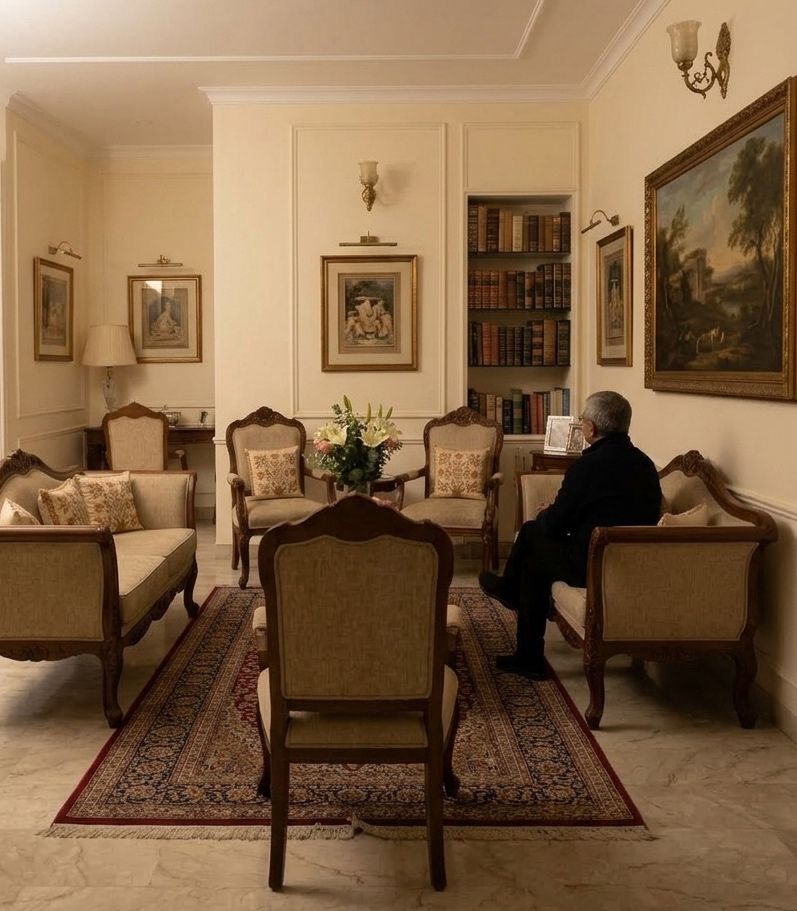
I once walked into a beautifully designed room. Soft lighting. Elegant furniture. Fresh flowers placed with aesthetic discipline. Everything looked curated. Intentional. Almost perfect.
But something felt incomplete. There was no mirror.
Not in the bedroom. Not in the washroom. Not even a discreet one tucked behind a door.
At first it felt philosophical.
A room free from vanity.
A space not obsessed with appearance.
Then it felt unsettling.
How do you get ready in a room that refuses to show you your own face?
We build similar rooms in our lives.
Polished bios. Thoughtful interviews. Strategic decisions. Controlled emotions. Composed conversations. We curate competence. We decorate strength.
But what if the architecture of your life has no mirror?
A mirror is not for admiration.
It is for confrontation.
It does not applaud your achievements.
It does not cushion your disappointments.
It simply reflects.
And that is precisely why many avoid it.
Because the mirror does not negotiate.
It does not edit.
It does not allow narrative management.
It shows the fatigue behind ambition.
The doubt behind confidence.
The loneliness behind independence.
The fear behind brilliance.
The mirror is where the unconscious becomes visible.
Yet we stay busy rearranging the furniture.
We stay productive.
We stay admired.
We stay indispensable.
But we do not stay still long enough to ask:
– Am I aligned with who I truly am?
– What am I avoiding?
– What truth have I postponed?
– Which version of me am I protecting?
The person in the mirror holds every answer you are chasing outside.
But we fear that if we look long enough, something might crack.
Here is the irony.
We spend years building credentials to impress the world, but we hesitate to build the courage to impress ourselves.
The mirror does not care about titles.
It asks about integrity.
It asks whether your outer success matches your inner truth.
It asks whether you are fragmented across rooms or integrated as one person.
A room without a mirror is comfortable.
You can adjust lighting.
You can change decor.
You can host applause.
You can avoid silence.
But you cannot see yourself.
And perhaps that is the real exhaustion.
Not ambition.
Not responsibility.
Not expectations.
The exhaustion of carrying a version of yourself that you have never fully examined.
The answers are not in another city.
Not in another role.
Not in another relationship.
They are quietly waiting in the eyes of the one who looks back at you when you finally decide to stand still.
The question is not whether the mirror exists.
The question is whether you are ready to look.