
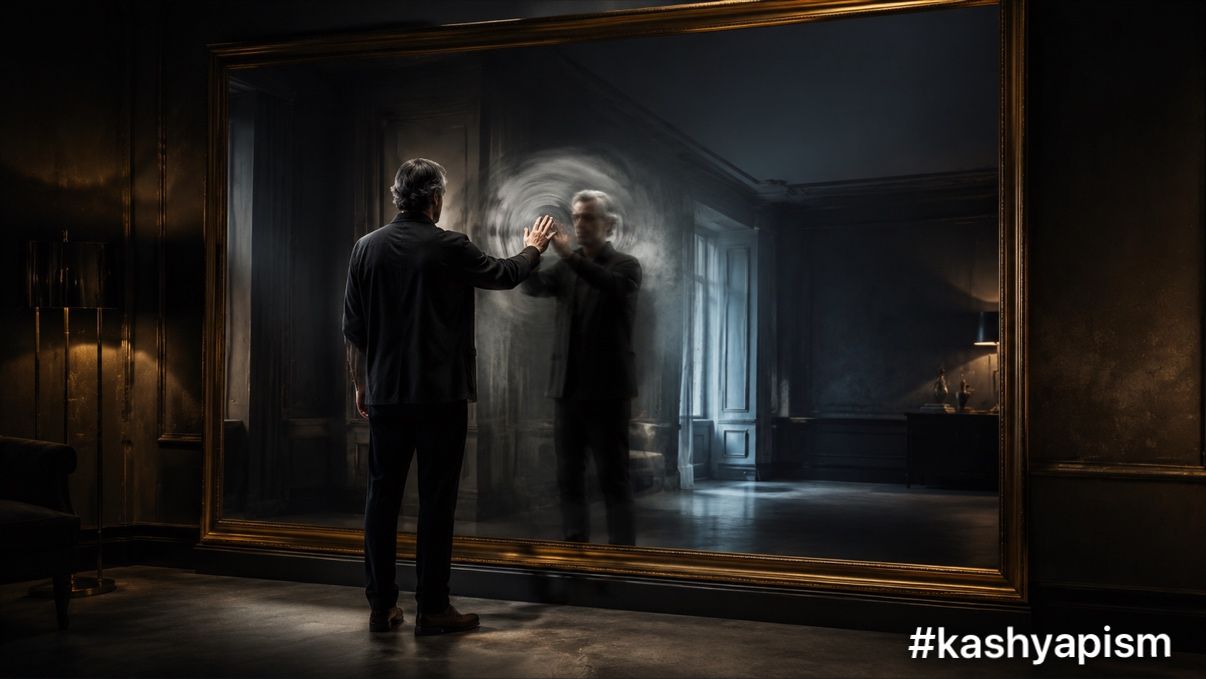
Sometimes, the person giving the wisest advice is also the one making the most foolish decisions in their own life. We all know such a person. In fact, on certain days, we are that person.
We can analyse a friend’s relationship, identify what is wrong with someone’s business and confidently tell a colleague which career move to make. But when the same confusion enters our own life, our celebrated wisdom quietly leaves through the back door.
Psychologists call this the Solomon Paradox.
The name comes from King Solomon, the biblical ruler renowned for extraordinary wisdom. People travelled from distant lands to seek his counsel. Yet Solomon struggled to apply similar wisdom to his own life. Despite advising others with remarkable clarity, his personal choices, relationships and political compromises eventually weakened his kingdom.
Apparently, wisdom also has blind spots. Usually very close to home.
In 2014, researchers from University of Waterloo conducted three experiments involving 693 people. Participants were asked to reflect on relationship conflicts, either their own or someone else’s.
When considering another person’s problem, they demonstrated wiser reasoning. They considered different perspectives, accepted the limits of their knowledge and anticipated how circumstances might change.
When the problem was their own, much of this wisdom disappeared.
Interestingly, older participants were no better at it than younger ones. So while age may bring experience, it does not automatically bring perspective. Sometimes, it merely gives us more sophisticated explanations for our mistakes.
Why does this happen?
When the problem belongs to someone else, we see the complete picture. When it belongs to us, we see it through a crowd of emotions, fears, hopes, memories, attachments and ego.
We are no longer evaluating the situation. We are defending our role in it.
The solution is not to become less emotional. That would make us efficient machines and rather unpleasant human beings.
The solution is to create psychological distance.
Imagine that the problem belongs to a close friend. What would you tell them?
Write down the situation without explaining or justifying your behaviour. Replace “I” with your name and ask, “What should Kashyap do now?” It may sound slightly theatrical, but the research found that speaking to yourself in the third person can improve wise reasoning. Also ask what facts you would notice if you were not personally involved. And what would you decide for him?
Sometimes, we do not lack wisdom. We are simply standing too close to the problem to use it.
So, think about the problem currently occupying your mind.
If it belonged to your closest friend, what would you advise?
And more importantly, why are you unwilling to follow that advice yourself?