
A brand may be defined in the boardroom. But it is built in every interaction.
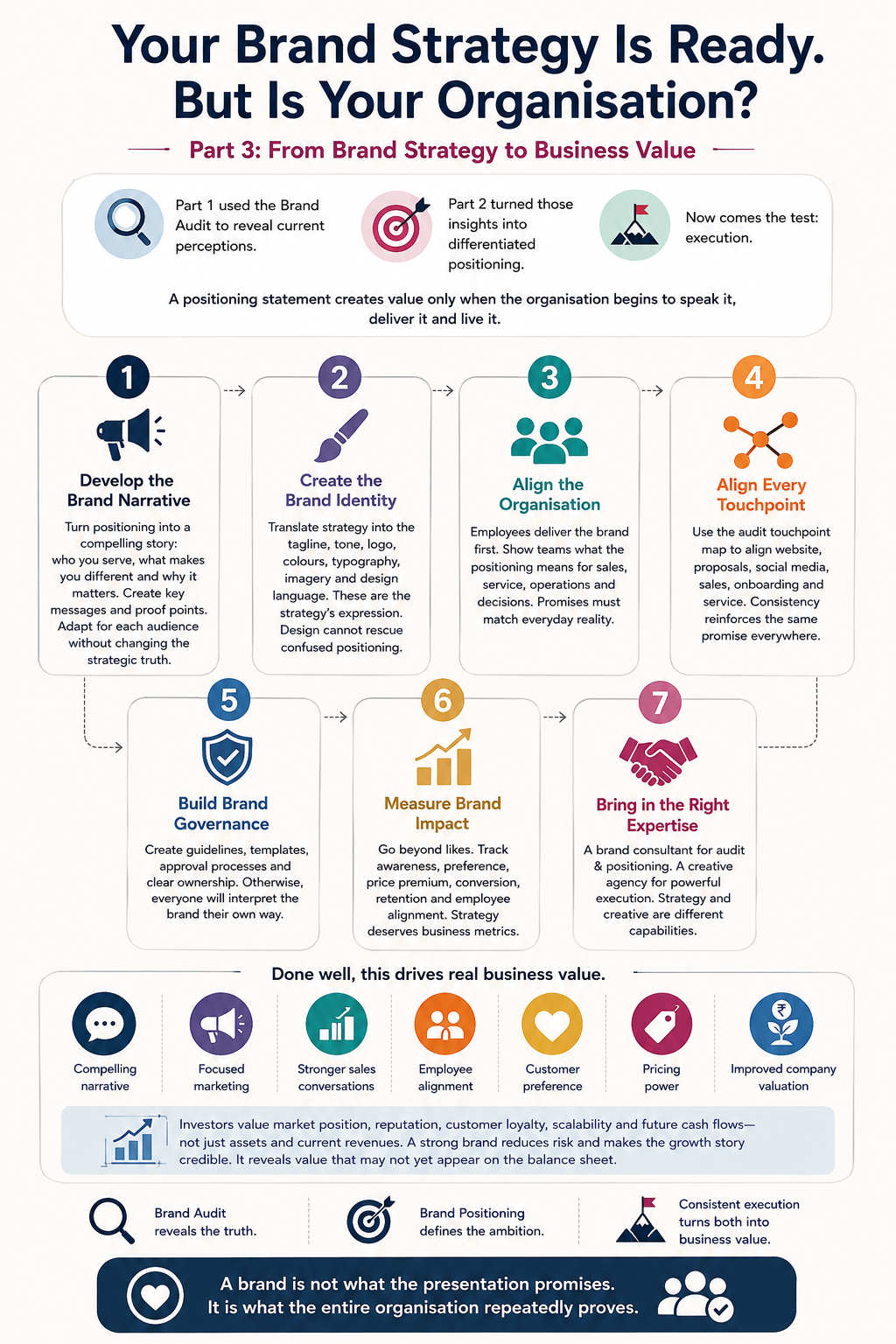
Part 1 used the Brand Audit to reveal current perceptions.
Part 2 turned those insights into differentiated positioning.
Now comes the test: execution.
A positioning statement creates value only when the organisation begins to speak it, deliver it and live it.
Here is how:
1) Develop the Brand Narrative:
Turn the positioning into a compelling story: who you serve, what makes you different and why it matters. Create the core message, supporting messages and proof points. Adapt the narrative for different audiences without changing its strategic truth.
2) Create the Brand Identity:
Translate the strategy into the tagline, tone, logo, colours, typography, imagery and design language. These are the strategy’s expression. Sophisticated design cannot rescue confused positioning.
3) Align the Organisation:
Employees deliver the brand long before advertising does. Show teams what the positioning means for sales, service, operations and decisions. If the brand promises agility but every approval needs twelve signatures, customers will discover the fine print.
4) Align Every Touchpoint:
Use the Brand Audit touchpoint map to align the website, proposals, social media, sales, onboarding and service. Consistency means reinforcing the same promise through every experience.
5) Build Brand Governance:
Create guidelines, templates, approval processes and clear ownership. Otherwise, everyone will interpret the brand according to personal taste.
6) Measure Brand Impact:
Move beyond likes and attractive campaign reports. Track awareness, preference, price premium, conversion, retention and employee alignment. Strategic investment deserves business metrics.
7) Bring in the Right Expertise:
You may need professional support. A brand consultant can conduct the audit and develop the positioning. A creative communication agency can turn the strategy into effective deliverables.
Strategy and creative execution require different capabilities. One attractive logo cannot perform both jobs.
Done well, this creates a compelling narrative, focused marketing, stronger sales conversations, employee alignment, customer preference and pricing power.
It can also improve company valuation. Investors value market position, reputation, customer loyalty, scalability and future cash flows, not only assets and current revenues.
A strong brand reduces risk and makes the growth story credible. It reveals value that may not yet appear on the balance sheet.
The Brand Audit reveals the truth.
Brand Positioning defines the ambition.
Consistent execution turns both into business value.
Because a brand is not what the presentation promises. It is what the entire organisation repeatedly proves.